
It’s Itchy…
Is it allergies?

Not every itch fits in the same box.
Skin and ear problems can look remarkably similar, even when the underlying causes are completely different.
Is It Really an Allergy?
Many different problems can cause similar skin and ear symptoms. Sometimes allergy is the primary problem. Sometimes it isn’t. And sometimes more than one thing is happening at the same time.
TRUE ALLERGY
Food allergens
Environmental allergens
Other confirmed allergic disease
ALLERGY LOOK-ALIKE
Fleas
Mites
Ringworm
Yeast
Bacterial infection
Other skin conditions
BOTH / CONTRIBUTING FACTORS
An allergy can exist alongside infection, parasites, sensitivities, gut or microbiome changes, or other factors that may add to the overall burden.
Before We Assume It’s an Allergy…
We first look for identifiable problems that could explain or contribute to the symptoms.
The Signs Can Look the Same
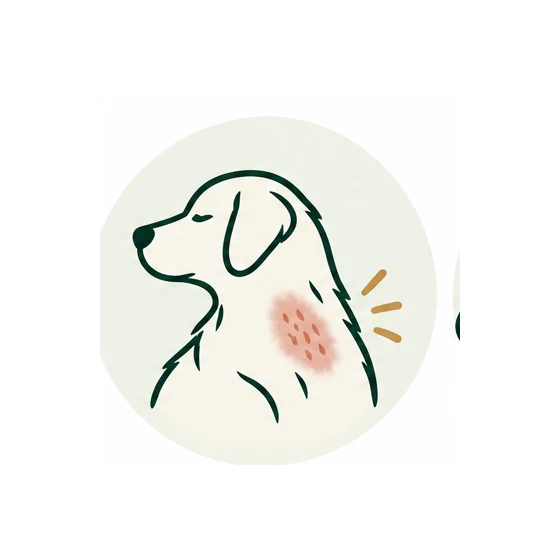
Is Your Pet Doing Any of These?






So how do we tell the difference?
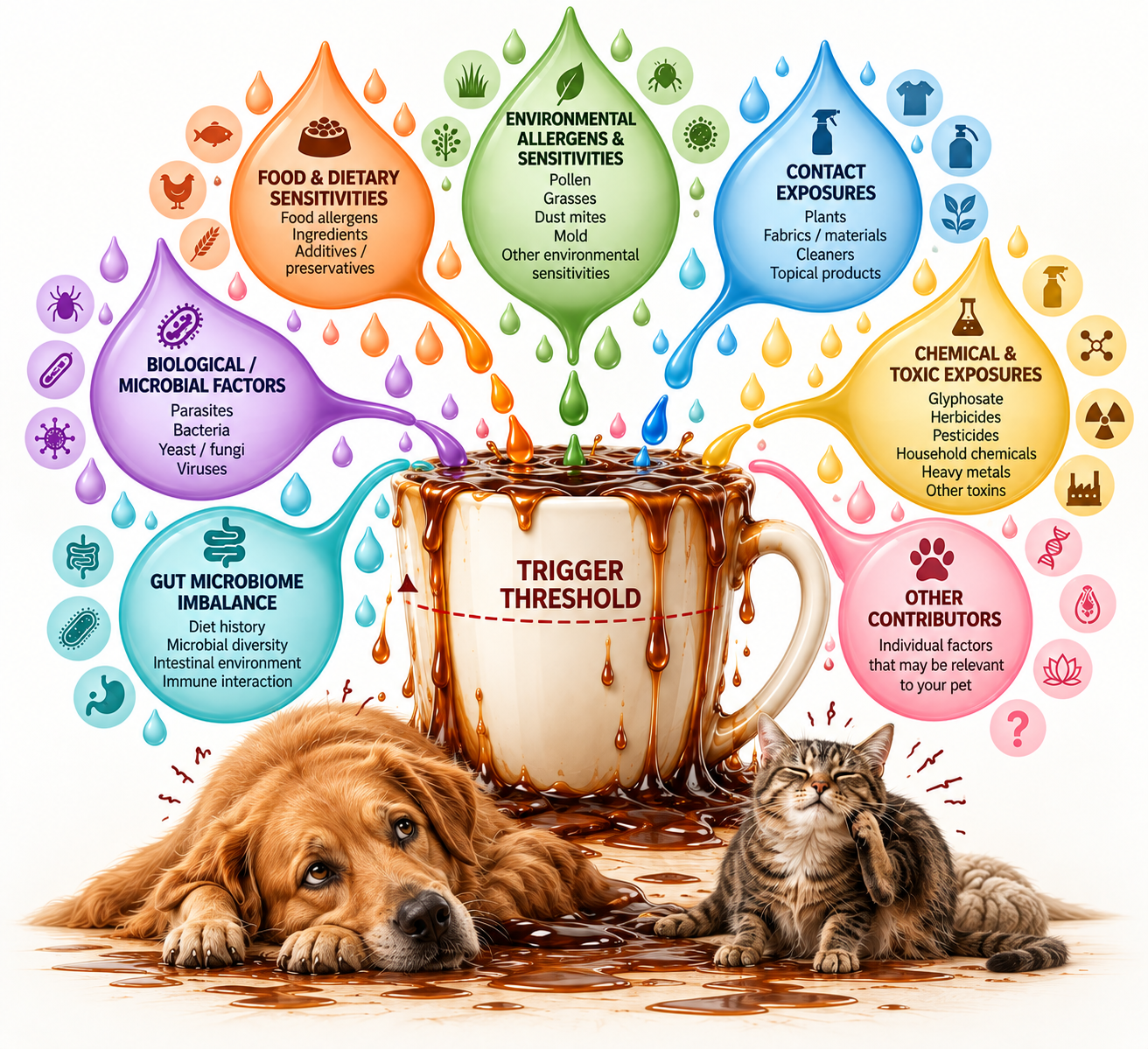
Every Pet Has a Different Cup
Food, environmental allergens, contact exposures, microbes, gut health, and other contributors can all add to the overall burden.
When enough contributors accumulate, symptoms may appear.
The goal isn’t to chase every possible trigger. It’s to identify the contributors that matter most for this patient.

Fewer triggers. Less overflow. More comfort.
A More Comfortable Patient
We don’t necessarily need to eliminate every possible contributor.
We identify what appears to matter most, address what we can, and reassess how the patient responds.
Sometimes reducing a few important contributors is enough to bring the overall burden below that patient’s threshold.
Ozone therapy will also be part of the plan. Rectal ozone, ozonated saline, and localized ozone applications give us additional ways to support irritated skin and ears while we continue investigating the underlying triggers.
How VitalWell Looks Deeper
When signs persist or return, the next step depends on what your pet is telling us. We choose diagnostics based on history, examination findings, previous response to treatment, and which drips are most likely to matter.
START WITH THE SKIN & EARS
Look for problems we can identify and address directly.
Cytology • Parasites • Bacterial or yeast infection • Fungal disease • Other skin or ear conditions
INVESTIGATE ALLERGIES & SENSITIVITIES
When allergy remains part of the picture, determine which exposures may be contributing.
Food • Environmental • Contact • Allergy testing • Individualized allergy treatment
LOOK FROM THE INSIDE OUT
Sometimes what we see on the skin reflects something happening elsewhere.
Nutrition • Gut microbiome • Vitamin & mineral status • Immune health • Other underlying health concerns
INVESTIGATE THE LESS OBVIOUS
When the usual answers don’t explain the whole picture, we can look deeper.
Glyphosate • Pesticides / herbicides • Heavy metals • Chemical exposures • Bioresonance assessment • Other specialized testing
We don’t start with every test. We start with the questions that make the most sense for your pet.
The Gut–Skin–Immune Connection
The gut microbiome and immune system are closely connected, and imbalances in the intestinal environment may influence how some pets respond to food, environmental exposures, and other triggers.
When the history points us in that direction, the microbiome may become another important piece of the investigation.
Ready to Get to the Bottom of the Itch?
We’ll start with your pet’s history, symptoms, and previous treatments, then prioritize the next steps that make the most sense.